TOOLS · CORTISOL
Is your cortisol
working for you?
Or are you working for it.
Cortisol shapes your performance, recovery, and sleep. See where you are on the curve and what to do next.
WHAT IS CORTISOL
The hormone that runs the system.
Recommended reading
10 rules of cortisol
A short framework for reading cortisol in the context of stress, performance, sleep, and recovery.
24
Hour cycle
Every hour has a role
Cortisol follows a precise circadian rhythm. It wakes you up in the morning, tapers through the afternoon, and should switch down in the evening. The problem starts when chronic stress distorts that curve.
3×
Chronic stress
Higher levels damage health
Persistently elevated cortisol affects immunity, memory, and cardiovascular health. It shortens telomeres and accelerates biological aging. This is not just fatigue. It is system-wide overload.
48h
Axis recovery
Recovery takes days, not hours
After intense stress, the cortisol axis does not fully recover in one night of sleep. Good recovery is a timed process, and that is exactly what we train.
INTERACTIVE TOOL
Build your day.
Add the events that happened today. The curve updates dynamically with a biologically realistic rise and gradual decline.
Baseline state
Events during the day
Choose an event, enter the hour, then press +
No events yet. Add what happened to you today.
Cortisol level, current hour
⚠ Educational model, not a medical test. Values are directional and based on circadian physiology. Clinical testing is required for HPA-axis diagnostics.
INTERVENTIONS AT ADAPTIVE STUDIO
Every method targets
a specific zone.
Cryotherapy, red light, breathwork, and nervous system training. Each intervention has a precise mechanism of action on the cortisol axis.
Cortisol ↓↓ after load
Cryotherapy
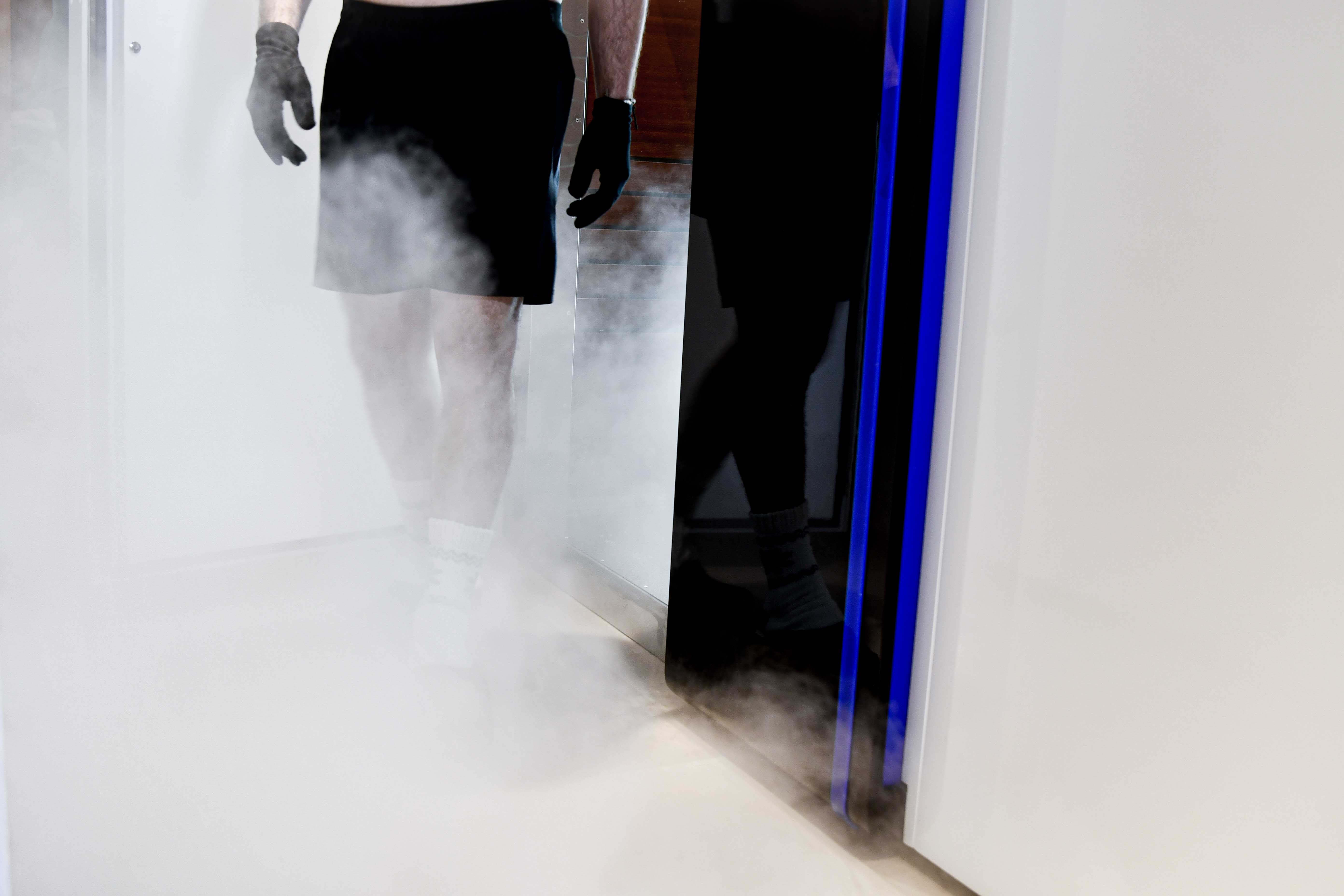
Short-term extreme cold, −110 °C, triggers an adaptive stress response followed by a deep parasympathetic shift. Cortisol drops and endorphins rise.
Best timing: afternoon, 14:00 to 18:00, or after intense physical load.
Cortisol ↓ rhythm and axis
Red light
Red light therapy, 630 to 850 nm, supports mitochondrial function and circadian synchronisation. It helps reset a healthier daily cortisol pattern.
Best timing: morning, 6:00 to 9:00, for synchronisation, or in the evening to calm the axis.
HRV ↑ and parasympathetic tone
Breathwork
Deliberate breathing techniques activate the parasympathetic nervous system and reduce circulating cortisol. It is a practical skill you can use whenever you need it.
Best timing: anytime, especially when levels are running high. Effect in about 10 minutes.
Adaptability and resilience
Nervous system training
A one-to-one programme focused on conscious regulation of the autonomic nervous system. We train the ability to move between activation and recovery, long term.
Results: visible within 4 weeks.
THE SCIENCE BEHIND THE METHOD
"Cortisol is not the enemy. It is the most precise biological timer you have. The problem starts when you ignore it."
Adaptive physiology, the foundation of the studio approach
CAR response, the most important moment of the day
Thirty to forty-five minutes after waking, cortisol naturally peaks. How you use that window shapes performance for the rest of the day.
Chronic stress distorts the whole axis
With repeated overload, the profile flattens. You stop having mornings with energy and nights with real recovery.
Recovery is a timed process
Good timing multiplies the effect of an intervention. Cryotherapy at 14:00 works differently than at 20:00.
HRV as a mirror of the cortisol axis
Heart rate variability correlates with HPA-axis balance. We monitor both and train both.
FIRST STEP
Start reading your rhythm.
The first step is a 30-minute conversation. We identify where your cortisol axis needs support.
No commitment.
No spam. One contact from us only.